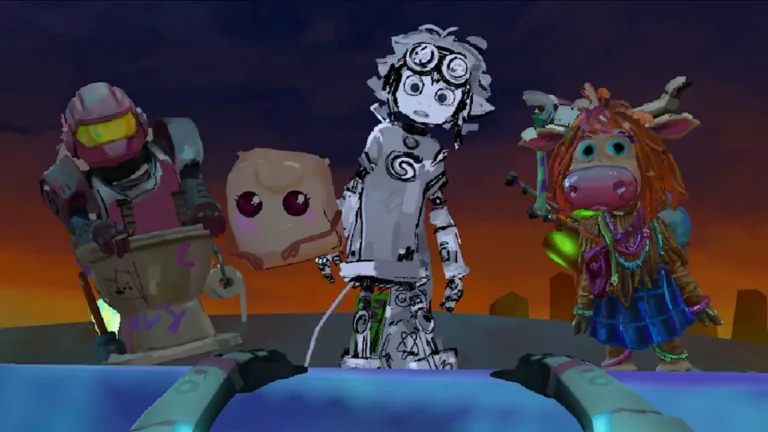
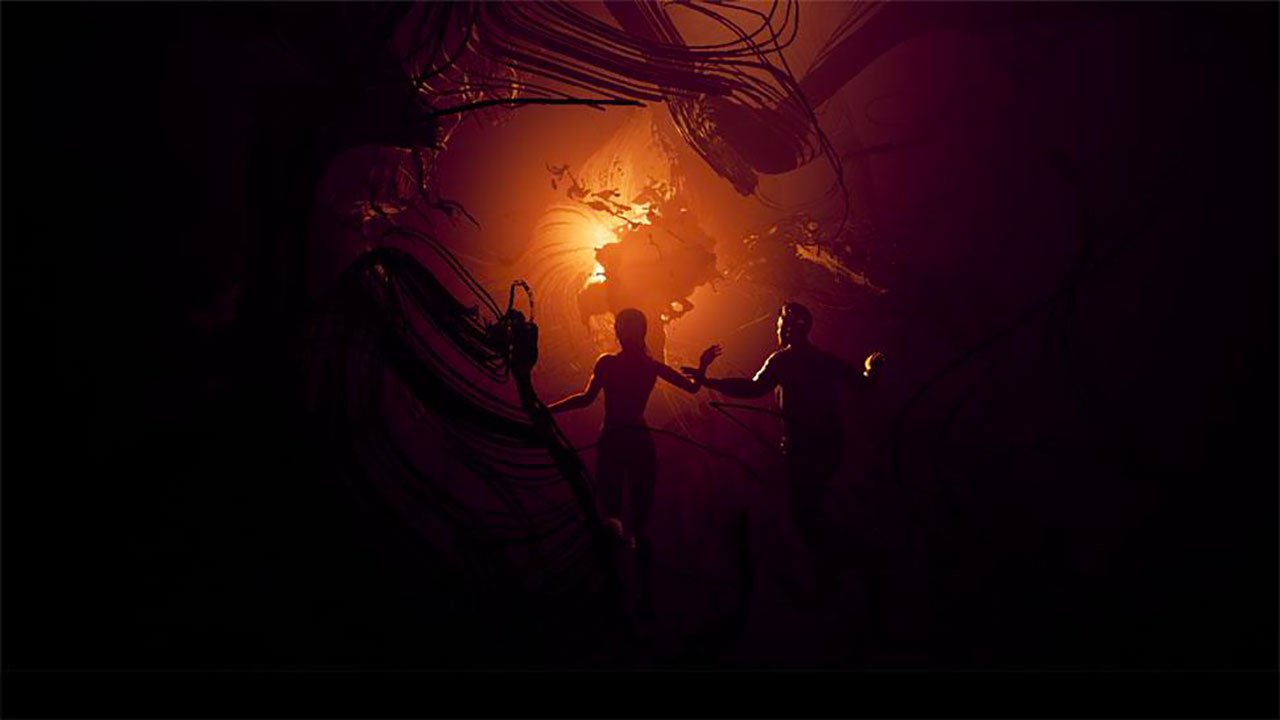
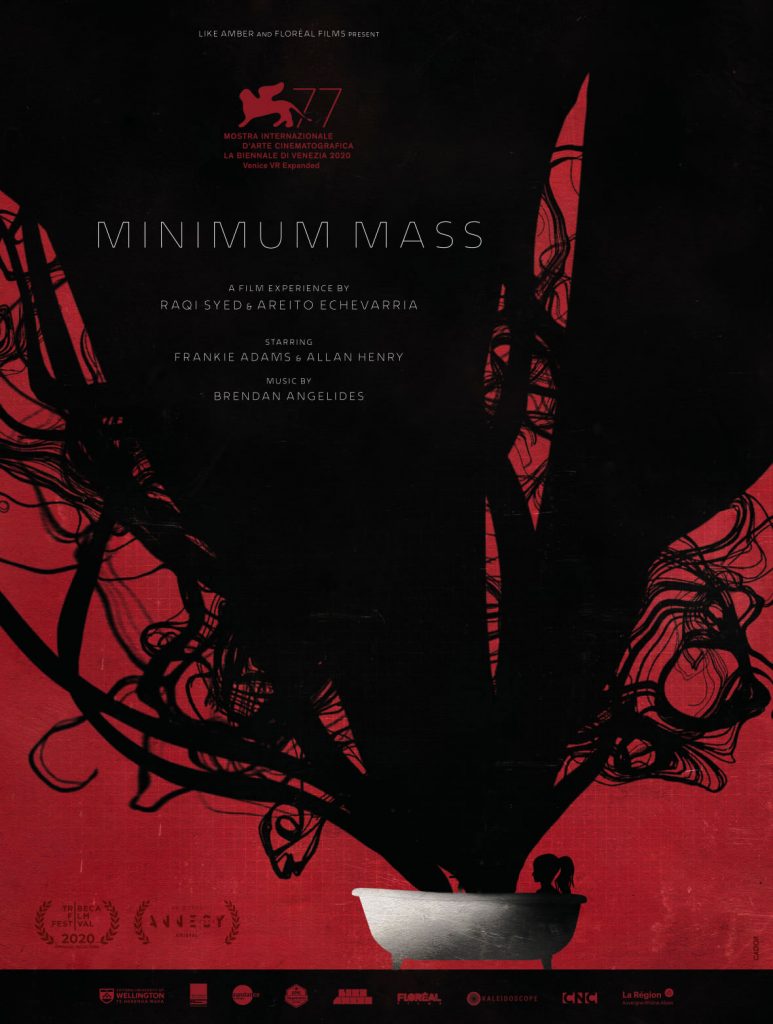
Long-awaited interactive experience MINIMUM MASS (Selected at New Frontier Story Lab 2018, winner of the Cristal for the Best VR Work at XR@Annecy 2020) is finally here! As an immersive graphic novel where we meet a couple in desire for a child, this VR film takes us into a dark universe of feelings and choices. We discuss this beautiful animated project with both directors Areito Echevarria & Raqi Syed.
MINIMUM MASS – A personal genesis
Raqi Syed – The genesis of the project is very personal. This is a story of a couple who experience miscarriage. This is what happened to us as we were trying to conceive our son. In the process of that grief, we wanted to make sense of it. So we wrote a story about it, and we knew we needed to be something really immersive, organic to deal with the drama of this kind of experience. But also, as artists, we wanted to explore it in an artistic way. In the same time we had to open this to a wider audience. We started to play with genre, speculative scifi… How can we take this from a very personal history and to share it? From a love story to a strange black hole phenomenon, it became MINIMUM MASS. This is what we submitted to the New Frontier Story Lab in 2018. Then we went through a more focused journey of mentorship, industry folks to formulate a complete idea of the project before going into production.
Areito Echevarria – The other thing that happened in this process is, amongst others projects we were written, MINIMUM MASS seemed to be the one that resonated the strongest with a lot of people. That sometimes is a clue in your creative process, to follow the right story.
Interactivity in a virtual world: a question of perspective
A. E. – The interactivity in MINIMUM MASS came from a very long process. We knew – pretty early on – we wanted to hold this world in our hands, in some ways possible. We were inspired by drawing softwares, like Tilt Brush, where you can grab objects etc. It seemed very intrusive, but very interesting. The way we implemented this in a story world was problematic regarding the size of the set we were going to use. It may be quickly uncomfortable. We tried a few things, allowing the user to move into the space, etc. But our process was really to strip everything back to have a more simple approach. Like using differentes lenses for a camera, to zoom into it or not. Removing complexity and simplifying, simplifying, simplifying… was our mojo! And we arrived at our final set up, and it works even if it feels restricted.
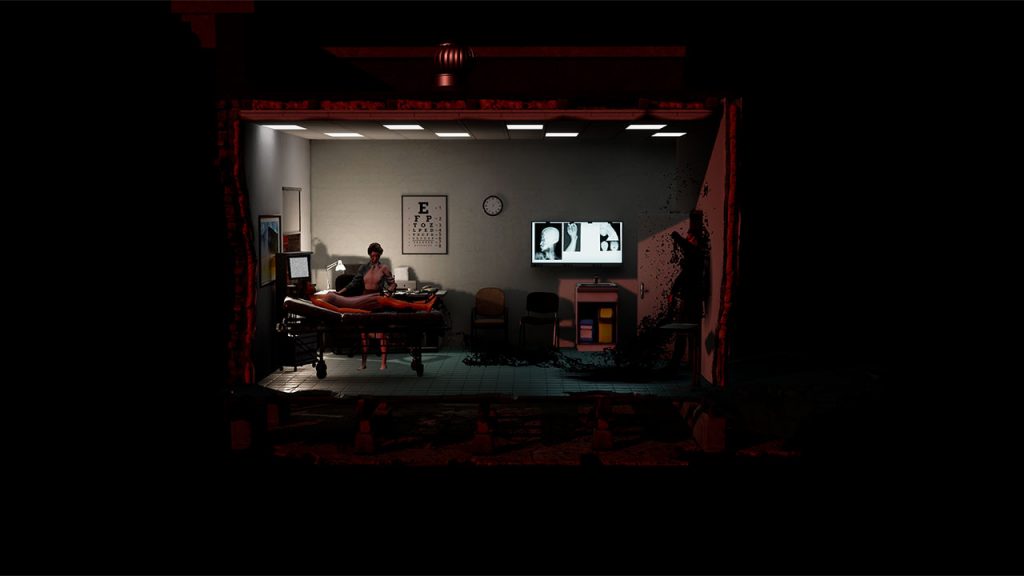
A. E. – In the story you can also change your point of view, regarding which character is involved. When you start the experience, it’s always the same beginning. Then you can move from it, manipulate it. We were really focused on the staging of everything, the characters, etc. I really like how in VR you can change your understanding to the story when changing your point of view, your proximity to the characters. You can play with this empathy, this intensity.
Creating the world, design & characters of MINIMUM MASS
R. S. – As computer graphic artists, we spent a certain portion of hour time holding characters in our hands anyway. Tumbling around in 3D spaces, manipulating and working them in many ways. This is a process of creating digital worlds, and that’s quite satisfying. It feels like a native way of interacting with 3D objects. And that’s cool to bring more interactivity to it! It almost breaks down the barrier between an act of creation and the act of experience.
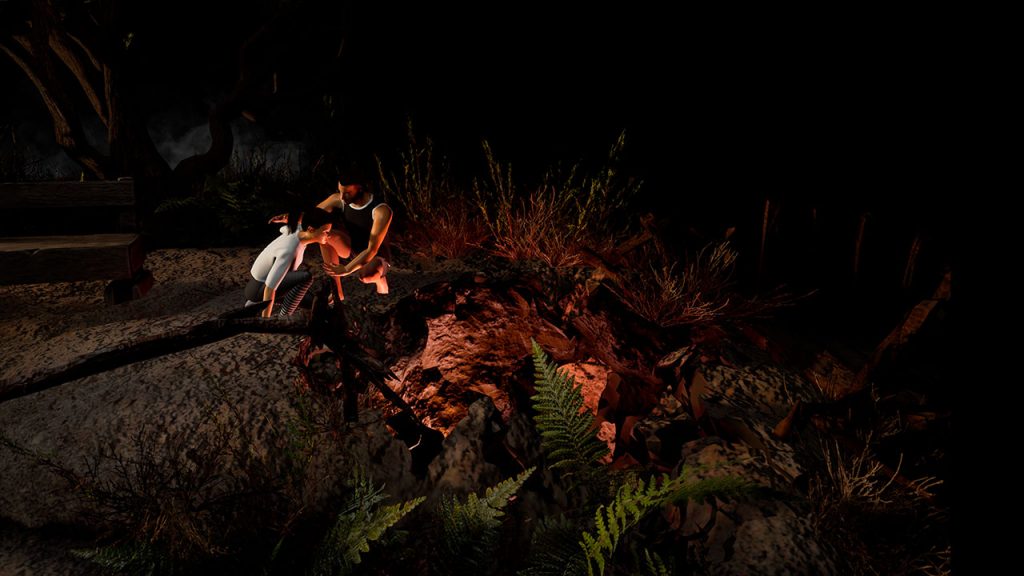
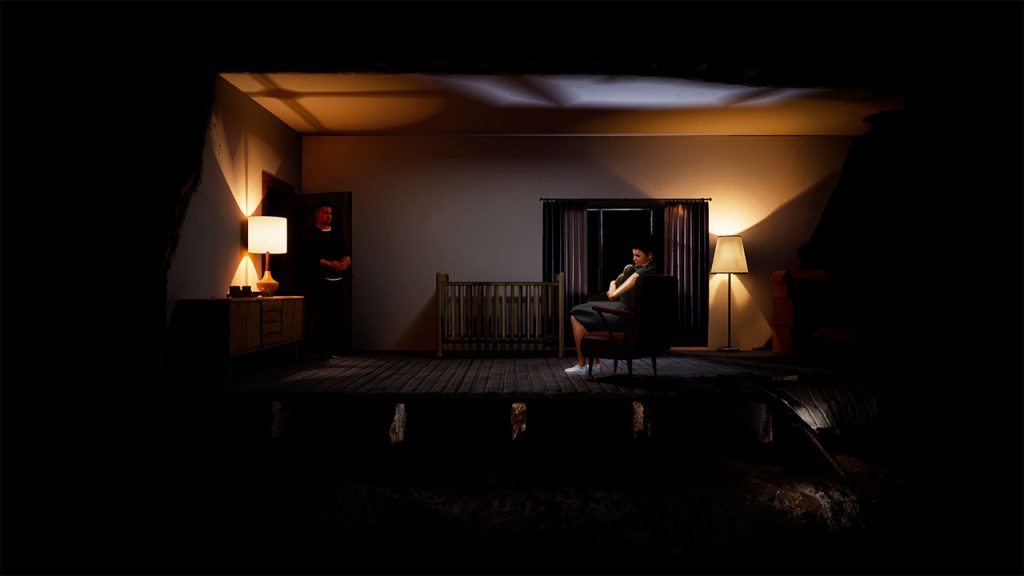
A. E. – I loved dioramas as a kid, and that is one of the motivations as well to replicate this idea in VR. Being able to offer a real-size childhood experience to our audience is great.
R. S. – It also speaks to the exploration of the uncanny side of the story, the psychological part of it. It’s quite realistic, but there is also another layer of experiential, genre effect that is introduced to this world of miniatures. It’s quite useful in fact for the user to explore it!
A. E. – For the entire time we worked on this project, we didn’t have real hands. So, finally for the first demo, we did use digital hands. And that gave us a new look on what we created, the miniature side of it. And that gave us a confirmation that our original idea worked pretty well.
Learning about immersive animation
R. S. – The most difficult part of the project was with no doubt the animation. This pipeline between motion capture (executed with brio by John Aberdein), body and facial, all together. Editing, adding them, cleaning everything frame by frame. We were not part of this world of animation, in fact. This is so much work with a small team. We’re more used to lighting, visual effects, and compositing. We went far on this for MINIMUM MASS. We had to outsource this, with Small Studio in Paris which did an amazing job. The all-thing was in fact a very slow process.
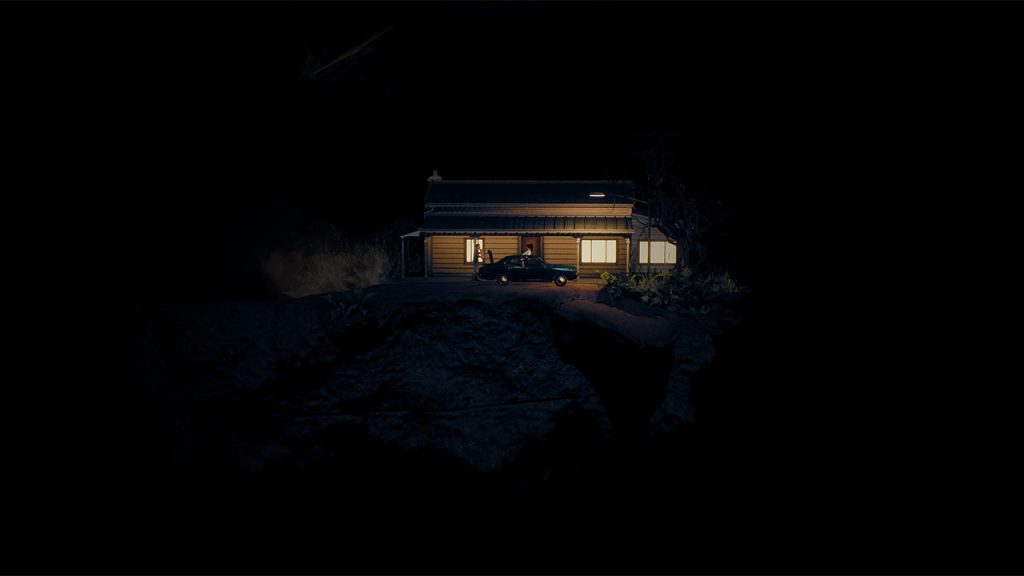
A. E. – Animation in VR is an all-new field. Most people are coming from 2D films, flat screens. There is a lot to consider to adapt a story into virtual reality. New things to fix, to create. You can’t get away with anything! All details matter. And yes, it’s time consuming.
R. S. – And this is where the miniature scale helped us to work around these details.
A. E. – And that could help from an evaluation point of view. Because you’re looking at your scene, working on the animation on a flat screen. It can be hard to understand everything, and to get to the point.
Venice VR Expanded: a special edition
A. E. – It’s a shame not to be part of it physically, but being part of the Selection is a great honor.
R. S. – What is so cool about Venice VR is this legacy of being part of the oldest film festival in the world! The hearth of MINIMUM MASS is cinematic. We were inspired by so many films on this, the incubation at Sundance included: all pointed to the cinema part of it. We’re glad to be part of the future of an independent storytelling world. Venice VR Expanded is a great reward for us as we crafted our story to be part of this.